


.svg)
 (1).svg)

The right condom is the one that fits well, is put on correctly every time and is paired with a water-based or silicone lube. You find the size from the width in mm that the product states, and the material from the "latex" or "latex-free" label on the packaging. No condom protects 100%: with correct use the risk goes down, but it never reaches zero.
THE ESSENTIALS IN 30 SECONDS
- The WHO asks for correct and consistent use. The CDC writes that correct use reduces the risk and does not eliminate it.
- Size: choose the width that fits comfortably and leave "bigger, to be safe" on the shelf.
- Material: the packaging states it. With a latex allergy, the NHS says to avoid latex condoms.
- Lube: water-based or silicone with latex. Oil, butter and body lotion can make the condom break.
- Check the expiry date and the CE mark, and wear one condom at a time.
- If it breaks or slips off, talk quickly to a pharmacist or a doctor.
Three things decide whether a condom will suit you: the size, the material and the lube. Here we take them in order, with sources for anything that touches health. It is an adults-only (18+) product, and there is no reason to feel awkward asking.
What it protects against and what it does not
According to the WHO, condoms are highly effective in preventing the transmission of most sexually transmitted infections, HIV included. It adds one condition: correct and consistent use, in vaginal, oral and anal sex.
For pregnancy, the NHS gives up to 98% with correct use every time you have sex. When use is not correct it falls to 82%, which is around 1 in 5 women over a year. The CDC closes the topic with one sentence worth remembering: correct use reduces the risk of disease and does not eliminate it. It also asks for a new condom for the entirety of every act.
Size: how to tell if it fits
The sources we read (WHO, NHS, CDC) give no guidance on size and no average. That is why we will not give you a table of the "if you are X, take Y" kind. All we have is what the product pages say: a nominal width in mm.
| Product | Width per the page | What else the page says |
|---|---|---|
| Satisfyer Small | 49 mm | A range of 6 sizes, from 45 to 64 mm |
| Satisfyer Large | 57 mm | Same range |
| Satisfyer XL | 60 mm | Same range |
| My Size Pro | Nine widths, from 45 to 72 mm | The page presents it as a product with a wide range of widths |
| Pasante Extra | 52 mm | The page states it is thicker, with extra lubricant |
My opinion: choose the width that fits comfortably. If it squeezes or hurts, try one size up. If it slips or bunches, try one size down. A condom that bothers you is one you risk not wearing. For persistent pain or irritation, talk to a doctor.
Material: latex, latex-free, thin
Per the NHS, some condoms are made from latex and others are latex free, and the material is stated on the packaging. If you have a latex allergy, do not take a latex condom. If you are unsure about the allergy or about another material, ask a pharmacist or a doctor before choosing.
Among latex-free condoms, the EXS Pull page states a latex-free material, with silicone lubrication and compatibility with water-based or silicone lubes. The page does not say which synthetic material it is, so read the packaging.
We call a condom thin when the manufacturer describes it that way. The EXS Pure is presented as ultra-thin latex with silicone lubrication.
"Thin" describes the feel. We found no source on the strength of one material against another, so we will not say that one is safer than another. With flavoured, ribbed or delay condoms, what the packaging says applies. For delay we have a separate article, on delay sprays and gels. You will find every type in the condoms category.
Lube: what fits
With a latex condom, choose a water-based or silicone lube. The WHO says other types may cause the condom to break, and names kitchen oil, butter and hand lotion. The NHS asks you not to use an oil-based lubricant with latex. The CDC mentions water-based lubricants and writes that petroleum jelly and body lotions can weaken latex.
For latex-free condoms compatibility depends on the material, and the source is the packaging. The full table by material is in our lube guide, and the difference between water and silicone is in the water or silicone lube article.
To choose, see the water-based lubricants and the silicone-based lubricants. For anal use there is a separate guide, anal lube.
Before and during use
The NHS suggests two quick checks on the packaging:
- The expiry date has not passed. An expired condom may not be effective.
- There is a CE (or UKCA) mark, which means it was tested to high safety standards.
One condom at a time. Two together, says the NHS, can make one or both split. We already cover the "double for extra protection" myth in 7 myths about sex.
If it breaks or slips off
The CDC says: if you feel it break, stop immediately, remove the broken condom and put on a new one. If it breaks or comes off, the NHS recommends urgent help from a pharmacist, a sexual health clinic or a GP, because you may need emergency contraception or a test for sexually transmitted infections. Here in Greece, start with a pharmacist or a doctor. How fast it matters is not for us to say, they will tell you.
For HIV testing, the Greek public health organisation EODY has a list of testing sites (edition 12/2023) with free and anonymous or confidential testing, some by appointment and some without. Before you go, confirm hours and details, as they may have changed.
World AIDS Day, 1 December
On 1 December it is World AIDS Day. For 2026 UNAIDS has the theme "Ending AIDS starts with access". On the same page it writes that in some places funding for condoms has been cut by more than 90%. We quote it as UNAIDS's finding and not as our own figure.
What we have in the shop
Whatever you choose, the width and the material on the packaging decide. These are indicative, one for each point of the guide. The full range is in the condoms category.
To test sizes, two neighbouring widths from the Satisfyer range, 49 and 57 mm per the page:
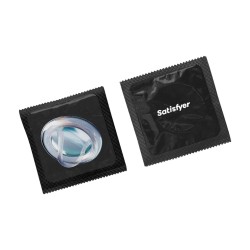
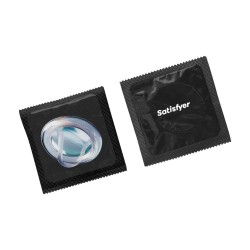
Latex-free per its page, and compatible with water-based or silicone lubes:

A thin latex condom with silicone lubrication:

A water-based lube whose page says it suits condoms and sex toys:

Frequently asked questions
How well exactly does a condom protect?The WHO calls it highly effective against most sexually transmitted infections, with correct and consistent use. The CDC writes that correct use reduces the risk and does not eliminate it. For pregnancy the NHS gives up to 98% with correct use every time. A "100%" figure appears in none of the three sources.
No primary source we read gives an average size. The practical guidance is the width in mm that the product states, and a fit that neither squeezes nor bunches. If you are unsure, try a neighbouring width. For pain or irritation, ask a doctor.
If you have no allergy, both are options, and the material is stated on the packaging. With a latex allergy, the NHS says not to use latex condoms. We have no source on the strength of one material against another, so we claim nothing. Ask a pharmacist if you have a history of allergy.
With a latex condom, the WHO and the NHS suggest a water-based or silicone lube, and the CDC mentions water-based. For latex-free condoms it depends on the material, so read the packaging. Oil, butter and body lotion do not suit latex and may break it.
No. The NHS says not to use more than one, because one or both may split. If you want more confidence, check the expiry date, the CE mark and the width. More in 7 myths about sex.
Stop immediately, remove the broken one and put on a new one, per the CDC. Then talk as soon as possible to a pharmacist or a doctor, because you may need emergency contraception or an infection test, as the NHS writes. We do not give doses or timings, ask the specialist.
Have a question?