


.svg)
 (1).svg)
For the pelvic floor, the evidence is mostly about exercises, not about balls. In small trials, vaginal weights came out comparable to exercises. Kegel balls can help you feel the muscle, but no study we read promises a better orgasm. If you leak urine or have pain, start with a doctor or a pelvic floor physiotherapist.
THE ESSENTIALS IN 30 SECONDS
- Cochrane found that pelvic floor exercises help with stress incontinence.
- Vaginal cones (weights) beat no treatment and showed no clear difference from exercises, in small trials.
- For sexual function the evidence concerns exercises, and its certainty is low.
- The NHS Lothian leaflet on cones (not on balls) lists pregnancy, periods, infection and the first weeks after birth as reasons not to use them. As a precaution, the same applies to balls.
- If you leak urine, the NHS says to see a doctor, with no embarrassment.
We opened the Cochrane, NHS and NICE pages and three PubMed abstracts, and we write only what they say. This text is for adults 18+ and does not replace a doctor or a physiotherapist.
Pelvic floor and Kegel balls: what is what
The NHS describes the pelvic floor as muscles that surround the bladder and urethra and control the flow of urine. Weak or damaged muscles can cause incontinence, which is why exercising them is recommended.
Vaginal balls, vaginal eggs, ben wa, geisha balls: many names for one family, one or two balls that go into the vagina, with or without a cord. They differ in weight, material and inner sphere. In the literature you will meet the "cone", a related object: a cone-shaped weight that you hold in place with your muscles.
What the studies show
Pelvic floor exercises, without weights
The 2018 Cochrane review pooled 31 trials with 1,817 women from 14 countries. In stress incontinence, 56% of women in the exercise groups reported cure, against 6% in the control groups. Across all types of incontinence together, the figures were 35% and 6%.
Cochrane rates the certainty as high for self-reported cure in stress incontinence and mostly moderate for the rest. The limits: trials were small to moderate, follow-up was usually under 12 months, and programmes varied widely in content and duration. The conclusion concerns exercises and incontinence. Balls and sexual function stay outside it.
The guidelines follow it. NICE (NG123) recommends a trial of supervised pelvic floor muscle training of at least 3 months as first-line treatment for stress or mixed incontinence (recommendation 1.4.4), with at least 8 contractions, 3 times a day (1.4.5). The page does not mention cones or balls.
Vaginal weights (cones)
The 2013 Cochrane review found 23 small trials with 1,806 women, of whom 717 used cones. Cones were better than no treatment. Against pelvic floor exercises no clear difference was found, nor against electrical stimulation, where the confidence interval was very wide.
The authors call the conclusion tentative until larger trials are done. Only 7 trials measured quality of life, and some women found the weights unpleasant or hard to use. The NHS likewise says that cones may help with stress or mixed incontinence, and that some women find them uncomfortable.
For sex-shop balls we found only a 2001 pilot study of geisha balls in 6 women, who also did pelvic floor exercises at home. The abstract mentions no comparison group, so it cannot separate what the ball did from what the exercises did.
Sexual function
The 2024 systematic review in the American Journal of Obstetrics and Gynecology looked at 21 randomised trials of pelvic floor exercises in which at least one arm aimed at sexual function, that is, in women with sexual dysfunction or aiming to improve it. In the meta-analysis of 4 trials, exercises improved arousal, orgasm, satisfaction and pain. The total score rose by 7.67 points, with a confidence interval from 0.77 to 14.57.
The authors speak of low to very low certainty, because the studies differed so much. This concerns exercises. For balls we found no evidence that promises a better orgasm, and we will not write it.
Where balls fit and where they do not
The NHS Lothian leaflet on cones gives one reason: a cone helps you feel your muscles working and can raise your motivation to exercise. It says there is evidence that cones can be as effective as exercises, and that more expensive ones are not necessarily better.
Our position: balls suit anyone who wants a tangible tool for her exercises, or wants them as part of her intimate life. They are not needed for the exercises, and our products are adult goods, not medical aids.
Most balls on the market differ in shape from the cone in the studies, and often have an inner sphere. Results for cones do not transfer automatically.
How to choose
We found no study on which weight or shape works best. These criteria are practical and our own, based on each product page.
| Type | What the page says | What to think about |
|---|---|---|
| Steel (ben wa) | Stainless steel, 2.2 cm diameter, 40 g. No cord is mentioned | The smallest diameter in the table. Removal is not described, so check the photos |
| Single silicone ball with an inner sphere | Medical-grade silicone, 4 cm diameter, 13 cm length, 43 g | One ball instead of a set |
| Silicone set | 100% silicone, 3.5 × 20 cm, 84 g. Avoid silicone lubricants and excessive heat | Water-based lubricant only |
| ABS in a silicone sleeve with a cord | 2 ABS balls, 3.9 cm diameter, 20 cm total length with the retrieval cord | The cord makes removal easier |
| Thumping set, the heaviest | Silicone and ABS, 16.7 × 3.3 cm, 5.2 cm insertable length, 122 g | For when the light one becomes easy |
Weight: start light
The NHS Lothian leaflet starts with the largest, lightest cone and moves up only when it gets easy. It notes that muscles tire towards the evening, so some hours will be harder.
Material and lubricant
The material is stated on the pages (silicone, ABS, steel). With a history of allergy, ask a pharmacist. The pages we read recommend water-based lubricant, and one explicitly warns against silicone. You will find the difference in our article on water-based and silicone lubricants.
Cord and removal
A 2024 case report in Cureus describes a 64-year-old woman who lost a ben wa ball during sexual activity and needed a gynaecologist to remove it. It is one case and says nothing about how common this is. Our own caution: prefer a model with a cord and, if it will not come out, get medical help.
Our own position, no medical recommendation: first learn to feel the muscle with nothing inside. The ball comes after, and only if you want it.
How to use and clean them
For the exercises, the Gloucestershire Hospitals leaflet describes a "squeeze and lift", holding for up to 10 seconds and feeling a letting go at the end. It says improvement takes several weeks, the best results come after 3 to 6 months, and that if nothing changes in 3 months you ask a health professional.
For cones, the NHS Lothian leaflet sets a limit of 20 minutes once a day and a programme of at least 12 weeks. The leaflet is meant for people who have been assessed by a physiotherapist. Ball pages have their own programmes (the Virgo starts with 10 to 15 minutes). If they differ, ask a physiotherapist. We found no source for long wear, so we do not suggest wearing them for hours or sleeping with them in.
For cleaning, the same leaflet says soapy water, rinsing and drying fully after every use, and storing in a clean container. See also the toy cleaners.
When to talk to a doctor or a physiotherapist
The NHS says to see a doctor if you have any type of urinary incontinence, and not to be embarrassed about it. The NHS page adds that a doctor can usually diagnose it after a conversation.
The NHS Lothian leaflet on cones lists when not to use them:
- an infection or a sexually transmitted infection in the area,
- during your period,
- severe prolapse,
- pregnancy,
- the first 12 weeks after vaginal surgery,
- until at least 6 to 8 weeks have passed since giving birth.
For balls we found no list of their own and we keep the same caution. For pain we found no source with a threshold, but if you have pain, stop and talk to a gynaecologist or a pelvic floor physiotherapist. NICE provides for a check of the contraction by a professional before supervised exercises (recommendation 1.3.4). For dryness and pain in menopause, see the article on sex toys and menopause.
What we have in the store
From the pages we keep material, dimensions, weight and instructions. We do not adopt claims about incontinence or orgasm, because none of the studies we read supports them. The whole range is in Vaginal Eggs and Kegel Balls, with the Kegel Balls listed separately. Vibrating vaginal eggs are a different product, for a different use.
First a set with a retrieval cord. The page says the balls are ABS inside a silicone sleeve, and that you use only water-based lubricant.
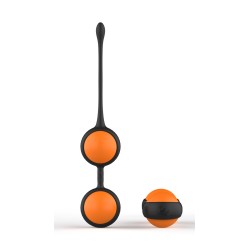
Guilty Toys Virgo Kegel Balls Cosmic Love Orange/Black
€9.90 €13.90 -29%
In stock, last 3 units
View productIf you do not want a set, this is a single silicone ball with an inner sphere, 43 g according to the page.
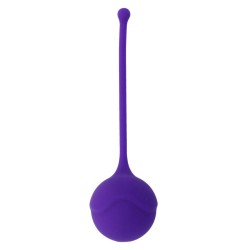
The matching silicone set, 84 g. Remember the page's instruction about silicone lubricants.
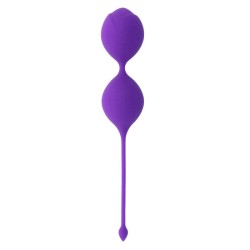
INTENSE | KISHA | Fit Silicone Kegel Balls - Purple
€13.90 €19.90 -30%
In stock, last 3 units
View productA heavier set in silicone and ABS, 122 g. After the light one.
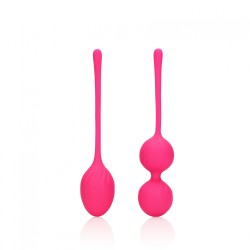
LoveLine | 2 Piece Thumping Kegel Ball Set | Wild Strawberry
€16.90 €29.90 -43%
In stock, last 3 units
View productAnd the classic steel ben wa, in stainless steel.
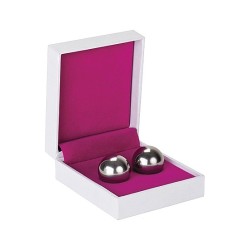
See also
Sex toys and menopause: what the studies show Water-based or silicone lubricant Vibrators: a buying guideFrequently Asked Questions
No. The exercises studied by Cochrane and NICE are done without a device. Cones came out comparable to exercises in small trials, so a ball at most adds feel and motivation. If you are not sure you are squeezing the right muscle, ask a physiotherapist.
The NHS Lothian leaflet on cones sets a limit of 20 minutes once a day. For balls we found no limit of their own. Follow the product page and do not leave them in for hours or overnight.
The NHS Lothian leaflet on cones says no in pregnancy and not until 6 to 8 weeks after birth. According to the NHS, in pregnancy pelvic floor exercises may help prevent incontinence. Ask a gynaecologist or midwife first.
The 2024 review found improvement in arousal, orgasm and satisfaction with exercises, but with low certainty. For balls we found no study.
The lightest, as the NHS Lothian leaflet on cones does. Our pages give weights from 40 to 122 g.
Have a question?