


.svg)
 (1).svg)
During menopause sex can become drier and more painful, because hormones change. For dryness the NHS suggests a water-based lubricant. A gentle sex toy is a comfort option, not a treatment. The studies show only associations. If pain or dryness persist, or there is any bleeding, talk to a gynaecologist.
THE ESSENTIALS IN 30 SECONDS
- Menopause is one of the causes of vaginal dryness. There are others.
- You put lubricant on before sex, while a moisturiser goes inside the vagina on a regular basis. When self-care is not enough, see a doctor.
- Two 2026 studies (3,001 and 150 people) show associations between sex toys, orgasms and symptoms. Neither shows that a toy fixes symptoms.
- If you choose a toy: soft silicone, gentle vibration, external stimulation, a grip that is easy to hold.
- Bleeding after sex or after menopause is always a reason to see a doctor.
Here we opened the pages of the NHS, the WHO and The Menopause Society and the abstracts of two studies, and we write only what they say. This text is for adults 18+ and does not replace your doctor.
What changes in the body and why
The NHS lists menopause as a cause of vaginal dryness, because hormone levels change. The Menopause Society describes that as oestrogen falls the vagina becomes drier and its lining thins, which makes penetrative sex painful.
It is not the only cause, though. The NHS list also includes hormonal contraceptives, antidepressants, breastfeeding, cancer treatments, diabetes, Sjögren's syndrome and perfumed soaps or washes.
Among the symptoms of menopause the NHS puts vaginal dryness, burning and itching, which can make sex painful, and separately a reduced sex drive. The WHO writes that the sexual well-being of menopausal women is overlooked in many countries, and that vaginal dryness and pain during intercourse may go unaddressed.
In medicine the genital and urinary changes of menopause are called the "genitourinary syndrome of menopause" (GSM). The 2020 position statement of the North American Menopause Society describes it as something that can significantly affect sexual function and quality of life. It estimates that it affects roughly 27% to 84% of postmenopausal women (a very wide range) and that it is likely underdiagnosed. In most cases, it says, symptoms can be managed.
Lubricant, moisturiser, doctor: which is which
The three words get mixed up easily. The table puts side by side what the sources say.
| What you notice | What the sources say | What to watch for |
|---|---|---|
| Friction and dryness during sex | Water-based lubricant before sex, on the vagina, on a partner or on the sex toy (NHS) | It dries relatively fast, so you reapply. Creams and lotions not meant for the vagina can irritate (NHS) |
| Dryness that is there outside of sex too | A vaginal moisturiser, placed inside the vagina to keep it moist (NHS). The Menopause Society mentions long-acting moisturisers used regularly | It is not a lubricant. Ask a pharmacist or doctor which one suits you |
| Pain with penetration | It may be caused by dryness, but there are many possible factors (Menopause Society) | If it persists, see a doctor. More lubricant does not solve it |
| Reduced desire | The NHS lists it among the symptoms and suggests trying different kinds of foreplay to see what increases arousal | No product "fixes" desire. If it bothers you, discuss it with a doctor |
| Self-care is not enough | Creams, gels, patches or medicines that increase oestrogen (HRT), decided by a doctor (NHS, Menopause Society) | The NHS notes they are not recommended for everybody. Discuss it with your gynaecologist |
The NHS advises avoiding perfumed soaps, washes, and creams or lotions not meant for the vagina, because they can cause irritation or infection. Our own addition: the same reasoning applies to anything you put on a sex toy that will touch the area.
What the studies show about sex toys and menopause
We found two recent studies. Both rely on questionnaires filled in once, and neither compared groups with and without sex toys. So they show associations.
3,001 women aged 60+ in the US
Kinsey Institute researchers surveyed a national, demographically representative sample of 3,001 women aged 60 and older in October 2023. The study was published in Menopause in 2026. Of the women who had masturbated at least once in the last year, 46.4% used a sex toy almost always or always. In sex with a partner the figure was 5.1%. Of those who had partnered sex, 38.7% used a sex toy at least rarely.
Women who used a toy almost always or always more often reported almost always or always having an orgasm, both in masturbation and in partnered sex.
The limits: self-reported, from one survey, in the US only. The data do not show that the toy causes the orgasm. The reverse may be true, or other factors may play a role. The abstract does not mention dryness or other menopause symptoms. The authors themselves conclude that older women could benefit from information on these topics from health care professionals.
150 people in peri- or postmenopause
The second is a study by Banbury and colleagues in Sexual and Relationship Therapy (April 2026). It surveyed 150 people online, aged 25 and over, in peri- or postmenopause. The authors found that more orgasms were linked to fewer symptoms, and that masturbation with sex toys explained part of that link in their statistical model.
There are limits here too: the sample is small, as the authors themselves note, and the survey was done at one point in time. It cannot tell whether fewer symptoms bring more orgasms or the other way around.
Our reading: sex toy use after 60 exists, mostly in masturbation. Whether it helps with symptoms we have no answer, and anyone who gives you one with certainty goes further than the studies.
How to choose
We found no study saying which sex toy suits menopause. The criteria here are our own experience, not medical advice.
External stimulation first
A clitoral vibrator or a wand works externally and needs no penetration. If penetration bothers you, you can enjoy yourself without pushing it. Pain, though, needs a conversation with a doctor, another toy will not solve it.
Material and lubricant
Choose a toy whose material is clearly stated on the page (silicone, ABS). As a default take a water-based lubricant, as the NHS also suggests. A silicone lubricant lasts longer according to manufacturers, but with silicone toys it needs care and a check of the toy's instructions. See the article on water-based and silicone lubricants. If you have a history of allergy, ask a pharmacist.
Intensity, grip, noise
Start from the lowest intensity and go up slowly. If it bothers you, stop. Look for a body that is comfortable to hold with one hand and a noise level that lets you relax. If grip or hand strength is an issue, the ergonomics criteria in the article on disability and chronic illness apply here too. For vibrator types overall, see the vibrator guide.
If it is your first toy, start with something small and simple before buying something expensive.
With a partner: words first
In the Kinsey study toys are used much less in partnered sex than in masturbation. That does not tell you what to do. If you have a partner, tell them where it hurts or what leaves you dry before you get to bed. Lubricant and a toy can come into the conversation as something shared. A slower pace can become your own pace.
What we have in the store
We do not have products made for menopause and we do not present them as medical. Below are those that fit the criteria, based on what each product page says.
First the lubricant. Waterfeel is water-based and, according to its page, suits sex toys and condoms, is skin-friendly and gives long-lasting lubrication. The page gives no ingredients, so check the packaging.

Two mini wands for external stimulation. The Wanderlust has a 15 cm total length, a flexible head, 10 programs, USB charging and a button on the body. The page says to try it first on the inner thigh or over underwear, and to use only water-based lubricants.
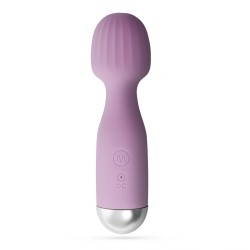
Crushious Wanderlust Mini Wand Vibrator 10 Modes Lilac 15 cm
€24.90 €31.90 -22%
In stock, last 4 units
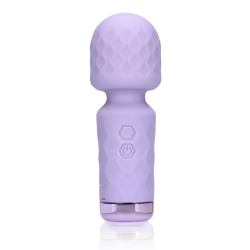
View productThe Loveline is made of silicone, with a total length of 11.4 cm, 10 programs and USB charging. The page gives a noise level of 60 dB and 40 minutes of run time, and states it contains no phthalates.
And a cleaner, because a toy is cleaned after every use. The page of the Waterfeel Toy Cleaner states antimicrobial action. For whether it suits the material of your own toy, check the manufacturer's instructions. More in the toy cleaners.

When to talk to a gynaecologist
The NHS says to see a doctor if you have bleeding after sex, between periods or after menopause. If 12 months have passed without a period, any vaginal bleeding counts, even if it happened once, was spotting, or it is unclear whether it was blood.
The same NHS page also suggests a doctor when:
- dryness lasts weeks and self-care does not help,
- dryness affects your daily life,
- there is unusual vaginal discharge.
For pain during sex we found no source with a specific threshold. The WHO says in general that symptoms affecting well-being should be discussed with a health professional, and notes that many women feel embarrassed to ask for support.
Frequently Asked Questions
None of the studies we read shows that. They show that women who use a toy more often report orgasm more often. In the small study of 150 people, masturbation with a toy explained part of the link between orgasms and fewer symptoms. For dryness the NHS suggests lubricant and moisturiser, and a doctor if it does not pass.
The NHS suggests water-based lubricant before sex and says it can go on the sex toy too. With a silicone toy we suggest water-based, unless the toy's instructions say otherwise.
The NHS suggests water-based. The Menopause Society mentions lubricants in general, without separating types. From our side, water-based suits all materials, while silicone needs care with silicone toys. Ask a doctor or pharmacist if you have irritation or allergy.
It is a known symptom. The NHS and the Menopause Society link it with dryness, but pain has other possible factors too. If it persists, talk to a gynaecologist. Do not try to solve it only with more lubricant.
Of course. In the Kinsey study 38.7% of those who had partnered sex had used a toy at least rarely. First say what bothers you, and start slowly.
Have a question?